stapes
Here is an SEO article on the topic of the stapes, written according to your system rules.
TITLE: The Stapes: The Smallest Bone in the Human Body and Its Crucial Role in Hearing
META DESC: Discover the stapes, the smallest bone in the human body. Learn about its anatomy, function in hearing, and its role in conditions like otosclerosis and hearing loss.
Introduction
When you think of bones, you likely imagine the long, strong bones of your arms and legs. However, the human body contains a tiny bone so small it could fit on a grain of rice. This is the stapes, also known as the stirrup. Located deep within the middle ear, the stapes is a critical component of the auditory system. Without it, the process of hearing would be impossible. This article explores the anatomy, function, and clinical significance of the stapes, the smallest bone in the human body.
What is the Stapes?
The stapes is one of the three auditory ossicles in the middle ear. The other two are the malleus (hammer) and the incus (anvil). The name "stapes" is Latin for "stirrup," which perfectly describes its shape. It is the smallest and lightest bone in the human body, measuring approximately 2 to 3 millimeters in length.
Anatomy of the Stapes
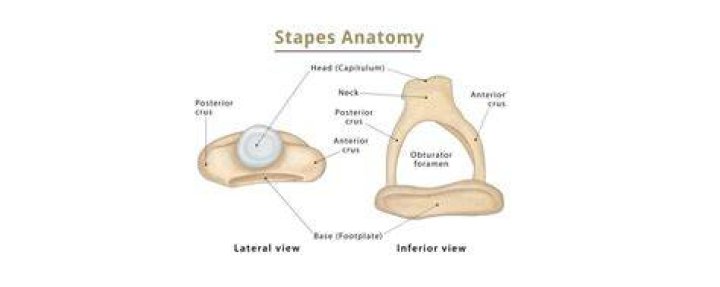
The stapes has a distinct structure consisting of four main parts:
- Head (Caput): The rounded top of the bone that articulates with the incus.
- Neck: The narrow region just below the head.
- Anterior and Posterior Crura (Limbs): Two delicate, curved arches that extend from the neck to the base.
- Footplate (Base): The flat, oval-shaped bottom of the bone that fits into the oval window of the inner ear.
This unique shape allows the stapes to function as a miniature piston, transferring sound energy from the air-filled middle ear to the fluid-filled inner ear.
The Stapes' Role in Hearing
The stapes plays a vital role in the process of hearing. Here is a step-by-step explanation of how it works:
1. Sound Collection: Sound waves enter the ear canal and cause the tympanic membrane (eardrum) to vibrate.
2. Ossicle Chain: The malleus, attached to the eardrum, picks up these vibrations and passes them to the incus.
3. Stapes Action: The incus then transmits the vibrations to the head of the stapes.
4. Impedance Matching: The footplate of the stapes pushes against the oval window. This action is crucial because it amplifies the sound pressure. The middle ear ossicles, with the stapes as the final link, overcome the impedance mismatch between air and the fluid of the inner ear (perilymph). Without this amplification, most sound energy would be reflected away.
5. Inner Ear Stimulation: The movement of the stapes footplate creates pressure waves in the fluid of the cochlea. These waves stimulate the hair cells, which convert the mechanical vibrations into electrical signals that the brain interprets as sound.
The Stapedius Muscle and the Acoustic Reflex
Attached to the neck of the stapes is the stapedius muscle, the smallest skeletal muscle in the human body. This muscle is innervated by the facial nerve (cranial nerve VII). When exposed to loud sounds, the stapedius muscle contracts, pulling the stapes away from the oval window. This action, known as the acoustic reflex, dampens the vibration of the stapes, protecting the delicate inner ear from potential damage caused by excessive noise.
Clinical Significance: Otosclerosis and Hearing Loss
The stapes is a common site for a condition called otosclerosis. In otosclerosis, abnormal bone growth occurs around the footplate of the stapes, causing it to become fixed or fused to the oval window. This fixation prevents the stapes from vibrating properly, leading to conductive hearing loss.
Symptoms of Otosclerosis:
- Progressive hearing loss, often starting in one ear.
- Difficulty hearing low-pitched sounds.
- Tinnitus (ringing or buzzing in the ear).
- Dizziness or balance problems (less common).
Treatment for Otosclerosis:
Treatment options depend on the severity of the hearing loss.
- Observation: In mild cases, no immediate treatment may be needed.
- Hearing Aids: These can amplify sound to compensate for the conductive loss.
- Surgery: The most common surgical treatments are stapedectomy and stapedotomy.
- Stapedectomy: The entire stapes bone is removed and replaced with a prosthetic piston.
- Stapedotomy: A small hole is drilled in the footplate of the stapes, and a tiny prosthesis is inserted to restore vibration.
Both procedures are highly effective in restoring hearing in most patients with otosclerosis.
Conclusion
The stapes may be the smallest bone in the human body, but its role in hearing is monumental. This tiny stirrup-shaped bone is the final mechanical link in the chain that transmits sound from the outside world to the inner ear. Understanding its anatomy and function is essential for diagnosing and treating hearing loss conditions like otosclerosis. The stapes is a perfect example of how even the smallest structures in the body can have a profound impact on our daily lives.
Frequently Asked Questions (FAQ)
Q: What is the smallest bone in the human body?
A: The stapes, located in the middle ear.
Q: What is the function of the stapes?
A: It transmits sound vibrations from the incus to the oval window of the inner ear, amplifying the sound in the process.
Q: What happens if the stapes is damaged?
A: Damage or fixation of the stapes, most commonly due to otosclerosis, leads to conductive hearing loss.
Q: Can stapes problems be treated?
A: Yes. Treatment includes hearing aids or surgical procedures like stapedectomy or stapedotomy.